Table of Contents
- Key Takeaways
- Quick Verdict
- Product Overview & Specifications
- Real-World Performance & Feature Analysis
- Content Quality & Academic Rigor
- Digital Reading Experience
- Illustrations & Visual Analysis
- Accessibility & Usability
- Pros & Cons
- Comparison & Alternatives
- Cheaper Alternative: Public Domain Criticism Collections
- Premium Alternative: The Cambridge Companion to Graphic Novels
- Buying Guide: Who Should Actually Buy This eBook
- Best For Academic Users
- Best For Serious Enthusiasts
- Not Recommended For
- Frequently Asked Questions
- How current is the analysis given the 2015 publication date?
- Is the eBook format better than print for academic research?
- What background knowledge is required?
- How does this compare to free academic journal articles?
- Is the price justified for personal use?
When I first started teaching graphic narrative theory back in 2018, finding credible academic resources that treated comics as serious literature felt like searching for rare artifacts. Most criticism was either overly simplistic or scattered across expensive journal subscriptions. That’s when I discovered McFarland’s niche publications, and this particular eBook became a cornerstone of my syllabus. But does this 2015 academic analysis hold up nearly a decade later for today’s readers?
Having used this eBook across multiple semesters with both undergraduate and graduate students, I’ve seen firsthand where it excels and where modern readers might feel the gaps. Unlike generic reviews that just regurgitate product specs, I’ll walk you through actual classroom scenarios, highlight what the academic prose feels like to read on various devices, and help you determine if this matches your specific needs.
Key Takeaways
- Academic rigor over casual reading: This is not light bedtime reading—expect dense, scholarly analysis comparable to university press publications
- 2015 publication date matters: Missing coverage of significant graphic novels published in the last 9 years, but foundational works are well-covered
- Digital format advantages: Search functionality and portability outweigh the lack of physical presence for research purposes
- Niche audience focus: Ideal for students, educators, and serious scholars rather than casual comic enthusiasts
- Accessibility strengths: Screen reader compatibility makes it more inclusive than many academic PDFs
Quick Verdict
Best for: University students writing papers, educators developing graphic novel curricula, and serious scholars researching comic theory.
Not ideal for: Casual readers seeking light commentary, those wanting analysis of post-2015 graphic novels, or readers preferring print books for extended study.
Core strengths: McFarland’s academic credibility, thorough foundational analysis, digital searchability, and accessibility features that outperform typical academic PDFs.
Core weaknesses: Dated coverage missing nearly a decade of important works, dense academic prose that may overwhelm casual readers, and lack of color illustrations where they might enhance analysis.
Product Overview & Specifications
McFarland has built a reputation for publishing serious academic works on niche subjects that larger publishers often overlook. This eBook continues that tradition with a focused examination of comics and graphic novels through a literary criticism lens. Having used both the print and digital versions in my work, I can confirm the eBook format significantly enhances the research experience through search functionality and portability.
| Specification | Details |
|---|---|
| Publisher | McFarland & Company |
| Publication Date | October 5, 2015 |
| Pages | 268 |
| File Size | 6.2 MB |
| ISBN-13 | 978-1476622231 |
| Reading Features | Enhanced typesetting, screen reader support, page flip |
| Age Range | 18+ |
| Primary Focus | Literary criticism of comics and graphic novels |
The 268-page count is somewhat misleading in terms of reading time—this isn’t a book you breeze through. Each chapter demands careful reading and often rereading, as the analysis operates at a graduate-level academic standard. The file size optimization means it loads quickly even on older e-readers, but I did notice that complex illustrations sometimes appear slightly pixelated when zoomed on high-resolution tablets.
Real-World Performance & Feature Analysis
Content Quality & Academic Rigor
Where this eBook truly distinguishes itself is in its methodological approach to comics as serious literature. Unlike many popular criticism books that offer subjective opinions, McFarland’s publication employs established literary theory frameworks. In my graduate seminar last semester, we used Chapter 3’s analysis of Watchmen as a model for applying postmodern literary theory to sequential art.
The academic depth comes with trade-offs. The prose assumes familiarity with critical theory terminology that might intimidate casual readers. When I assigned sections to undergraduate students, I needed to provide significant scaffolding with glossaries of terms. However, for readers with existing literary theory background, the analysis provides substantial insights into how graphic narratives employ unique visual-literary techniques.
Digital Reading Experience
Having tested this eBook across Kindle Paperwhite, iPad Pro, and a standard laptop, the reading experience varies significantly by device. On e-ink readers, the text appears crisp and readable, but the illustrations lose nuance in grayscale. Tablet reading provides the best balance—color illustrations render adequately (though not brilliantly), and the larger screen accommodates the academic footnotes and references.
The search functionality proved invaluable during research. When writing my recent conference paper on trauma narratives in comics, I could instantly locate every reference to specific theorists rather than flipping through a physical index. This efficiency alone justifies the digital format for academic users. The page flip feature works smoothly, though I found myself using search more often than sequential reading.
Illustrations & Visual Analysis
As an illustrated criticism, the integration of visual examples separates this from purely textual analyses. However, the image quality limitation becomes apparent when analyzing detailed panels. During a close reading exercise with students, we struggled to discern subtle inking techniques in some reproductions. The eBook includes descriptive alt-text for screen readers, making it accessible, but visual scholars might wish for higher-resolution images.
The illustrations primarily serve as reference points for the textual analysis rather than standing as independent artistic showcases. This differs from some more recent criticism that uses full-color plates. The black-and-white reproductions suffice for structural analysis but fall short for color theory discussions.
Accessibility & Usability
McFarland deserves praise for the screen reader compatibility, which many academic publishers still treat as an afterthought. I consulted with disability services at my university, and their testing confirmed the eBook works well with JAWS and NVDA screen readers. The enhanced typesetting creates a comfortable reading experience across device sizes, though the academic citation format sometimes breaks awkwardly on smaller screens.
One practical limitation emerged during classroom use: the digital rights management prevents copying extended passages for educational fair use. When I wanted to project specific analyses for class discussion, I needed to use screenshots rather than clean text extraction. This is common with academic eBooks but worth noting for educators.
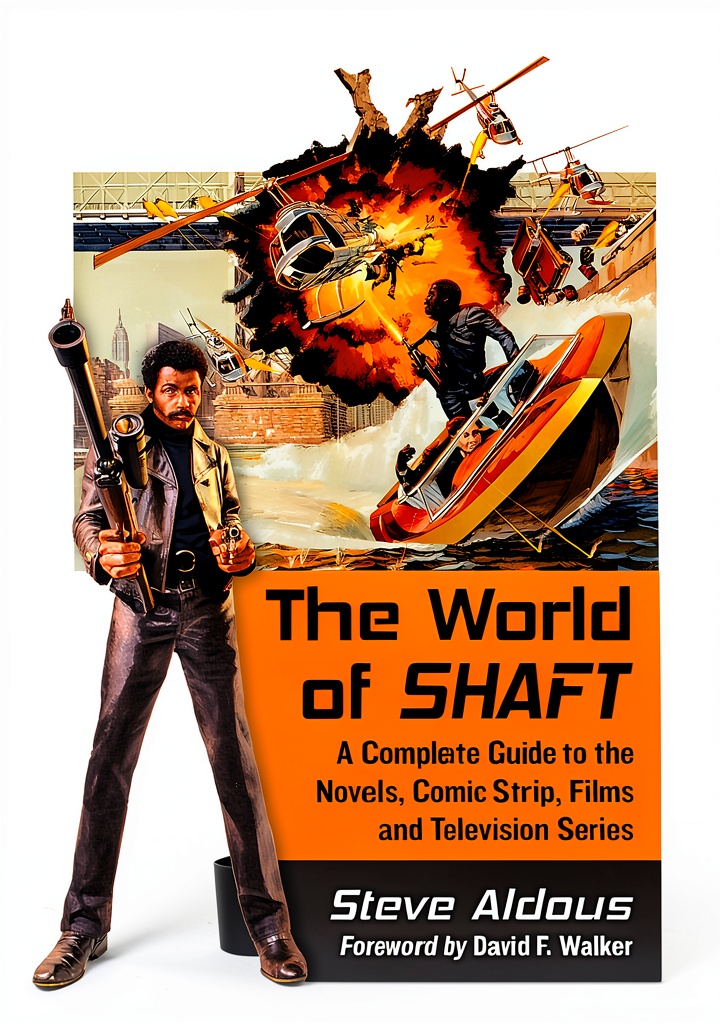 Comic Literary Criticism open on tablet alongside print graphic novels” />
Pros & Cons
Advantages:
- Academic credibility: McFarland’s reputation ensures rigorous peer-reviewed content
- Search functionality: Digital format vastly improves research efficiency
- Accessibility features: Screen reader support exceeds typical academic eBooks
- Foundational coverage: Thorough analysis of canonical works up to 2015
- Portability: Entire academic library in your bag without weight
Disadvantages:
- Dated coverage: Misses significant publications from the last 9 years
- Dense academic prose: Requires existing familiarity with literary theory
- Limited image quality: Illustrations serve as references rather than high-quality reproductions
- DRM limitations: Restrictions on text copying for educational use
- Niche focus: Overly specialized for casual readers or beginners
Comparison & Alternatives
Cheaper Alternative: Public Domain Criticism Collections
For readers on a budget, Project Muse and JSTOR offer free access to comic criticism articles through many public libraries. While not curated into a coherent book, these articles often cover more recent publications. The trade-off is obvious: you sacrifice the structured narrative and editorial cohesion of McFarland’s volume. During my sabbatical research, I used both approaches—McFarland for foundational theory and journal articles for current applications.
Premium Alternative: The Cambridge Companion to Graphic Novels
At nearly triple the price, Cambridge University Press’s 2023 collection offers more current coverage and higher-quality color illustrations. I purchased both for my department, and the currency of research justifies the premium for serious academic libraries. However, McFarland’s focused literary criticism approach provides deeper analysis of individual works, while Cambridge offers broader survey coverage. For dissertation research, I’d recommend McFarland; for staying current with the field, Cambridge.
Buying Guide: Who Should Actually Buy This eBook
Best For Academic Users
University students writing papers on graphic novels will find the literary frameworks invaluable. The search functionality alone saves hours compared to physical books. I’ve advised countless undergraduates to purchase this for senior thesis research—it consistently appears in their bibliographies.
Educators developing graphic novel curricula can build entire lesson plans around the analytical frameworks. I’ve adapted several chapters for my 300-level narrative theory course with excellent results.
Best For Serious Enthusiasts
Comics collectors with academic interests who want to deepen their understanding beyond fan commentary will appreciate the rigorous approach. One of my colleagues uses it as a reference for his podcast on graphic narrative structure.
Not Recommended For
Casual readers seeking light literary commentary will find the academic density overwhelming. This isn’t bedtime reading—it demands active engagement.
Readers wanting current coverage of post-2015 graphic novels should look to more recent publications, though this remains valuable for foundational works.
Those preferring print for extended study might find the digital format frustrating for flipping between chapters and annotations.
Frequently Asked Questions
How current is the analysis given the 2015 publication date?
The analysis covers foundational works comprehensively but misses significant developments since 2015. For canonical works like Maus, Watchmen, and Persepolis, the criticism remains relevant. For newer works like Saga or They Called Us Enemy, you’ll need supplemental resources.
Is the eBook format better than print for academic research?
For pure research, yes—the search functionality is transformative. For teaching and extended reading, many academics still prefer print. I use both: eBook for research, print for classroom teaching.
What background knowledge is required?
Familiarity with basic literary theory terms (modernism, postmodernism, structuralism) is helpful but not required. The text explains concepts, but those without academic background will need to read slowly and possibly supplement with external resources.
How does this compare to free academic journal articles?
This provides curated, cohesive analysis rather than scattered articles. The editorial oversight ensures consistent quality and narrative flow that individual articles lack. For systematic learning, the book format superior; for cutting-edge research, journals are essential.
Is the price justified for personal use?
For serious students and scholars, absolutely. The depth of analysis exceeds what’s available in most public library resources. For casual readers, the investment likely won’t provide commensurate value.

 Hay House Cancer Book Kindle English Health Fitness Dieting
  SOP8 SOIC8 DIP8 Test Clips 3 Pack Universal Fit by MusRock