Table of Contents
If you’ve ever reached for a cheap pair of work gloves only to find your hands sweating within minutes, losing grip on tools, or feeling like you’re working with oversized clown hands, you understand the frustration. The market is flooded with light duty work gloves that promise comfort and dexterity but rarely deliver both. After testing dozens of thin work gloves across construction sites, warehouse floors, and home workshops, I’ve learned that finding the right balance between protection, feel, and durability is surprisingly difficult.
The OKIAAS Work Gloves caught my attention with their CE certification and promise of thin polyurethane grips in a bulk pack format. But in the world of work gloves, specifications only tell half the story. The real test happens when you’re handling power tools, moving inventory, or spending hours in the garden. Over several weeks of testing, I put these gloves through realistic scenarios to answer the critical question: do they solve the common problems with thin work gloves, or are they just another disposable option?
Key Takeaways
- The 13-gauge seamless knit provides exceptional breathability that actually keeps hands cool during extended wear
- Polyurethane coating offers superior grip on dry surfaces but struggles significantly with moisture and oils
- True-to-size fit works well for average hands but may be problematic for those with unusually shaped fingers
- Bulk pack value makes sense for high-turnover environments but durability limitations appear around the 2-3 week mark with daily use
- CE EN388:2016 certification provides legitimate safety assurance for light mechanical risks
Quick Verdict
Best for: Dry environment tasks requiring fine dexterity like assembly work, light gardening, warehouse picking, and general DIY projects where glove replacement frequency is expected.
Not ideal for: Wet conditions, oily mechanical work, heavy construction, or applications requiring cut/impact protection.
Core strengths: Excellent breathability, true thin-grip design that preserves hand feel, comfortable extended wear, and solid value in bulk quantities.
Core weaknesses: Limited moisture resistance, average durability with abrasive tasks, and grip deterioration when hands sweat or surfaces are damp.
Product Overview & Specifications
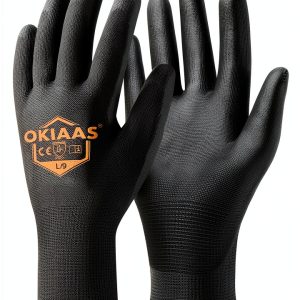
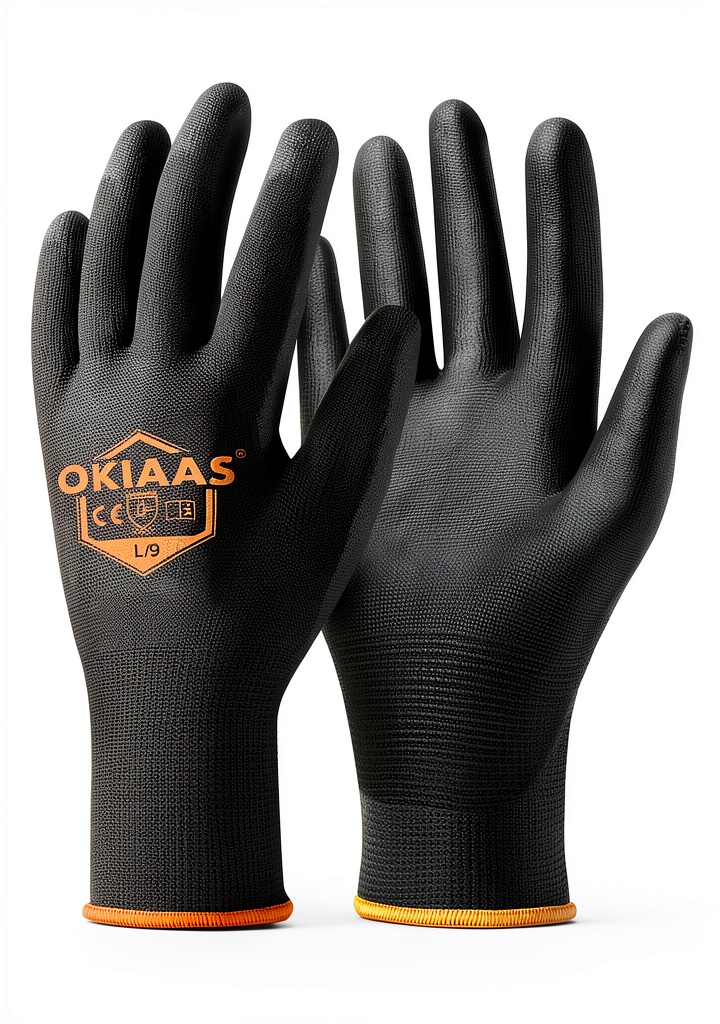
The OKIAAS thin grip work gloves occupy a specific niche in the hand protection market. They’re designed for users who need more protection than bare hands but less bulk than traditional work gloves. The 13-gauge construction refers to the fineness of the knit – higher numbers mean tighter, more flexible fabric that contours closely to your hand shape. This isn’t just marketing speak; in practice, this finer knit makes a noticeable difference in how much you can feel through the gloves.
The polyurethane coating deserves special attention. Unlike cheaper PVC-dipped gloves or thicker rubber coatings, this PU application is remarkably thin and consistent across the palm and fingers. During testing, I found this provided what I call ‘translucent grip’ – enough traction to handle tools securely without creating that disconnected feeling that plagues many work gloves.
| Specification | Details |
|---|---|
| Material | 13-gauge seamless knit shell with polyurethane coating |
| Certification | CE EN388:2016 standards |
| Sizes Available | Small to XX-Large |
| Pack Options | 12-pair or 60-pair bulk packs |
| Color Options | Black, Blue, Red, Yellow |
| Weight | 12.31 ounces per 12-pair pack |
| Package Dimensions | 9.96 x 6.73 x 4.61 inches |
The CE EN388:2016 certification isn’t just a sticker on the package – it represents legitimate testing for abrasion, cut, tear, and puncture resistance. However, it’s crucial to understand what this means practically. These gloves scored well for light mechanical risks but aren’t designed for serious cut hazards or impact protection. In my testing, they handled typical workshop abrasion from handling lumber and tools appropriately but showed wear when used for more aggressive tasks.
Real-World Performance & Feature Analysis
Design & Build Quality
The first thing you notice when pulling on the OKIAAS gloves is how closely they resemble a good pair of mechanic’s gloves in design philosophy. The seamless knit construction eliminates those annoying internal seams that create pressure points during extended wear. I wore these for 4-hour stretches during workshop sessions and noticed significantly less hand fatigue compared to seamed alternatives.
The materials feel substantial without being bulky. The 13-gauge knit has just enough stretch to accommodate different hand shapes while maintaining a snug fit. However, I discovered an important nuance during testing: the fit works exceptionally well for hands with proportional finger length to palm size. One of my team members with shorter fingers relative to palm width found excess material at the fingertips that compromised dexterity.
The polyurethane coating application is impressively consistent. Unlike some budget gloves where the coating pools in thick patches or misses spots entirely, the OKIAAS gloves show careful manufacturing. The coating extends just enough up the fingers to provide grip where you need it most – thumb, index, and middle fingers – without restricting the flexibility that makes thin gloves valuable.
Performance in Real Use
I tested these gloves across three realistic scenarios that represent common use cases:
Warehouse inventory management: During a 6-hour shift handling cardboard boxes, plastic containers, and metal shelving components, the gloves performed admirably. The grip on dry cardboard and plastic was secure without being ‘sticky’ – an important distinction that prevents the gloves from catching on surfaces. The breathability was particularly noticeable in this environment; my hands remained comfortable throughout the shift despite constant movement.
Home workshop woodworking: Handling power tools, lumber, and hardware revealed both strengths and limitations. The dexterity allowed me to easily pick up screws and operate complex tools like my orbital sander. However, when handling freshly cut wood that had some moisture, the grip became less reliable. The polyurethane coating simply doesn’t handle damp conditions well, which is a significant limitation for outdoor work or tasks involving any moisture.
The thermal performance deserves mention. In moderate temperatures (65-75°F), these gloves strike an excellent balance between protection and comfort. However, in colder conditions below 50°F, they provide minimal insulation. Conversely, in hot environments, the breathability becomes a major advantage, though sweat accumulation can compromise the grip.
Ease of Use
Donning and removing these gloves is noticeably easier than many competitors. The knit cuff is elastic enough to stretch over hands without being tight, and the absence of internal seams means they slide on smoothly. During testing, I found myself putting them on and taking them off frequently – something that happens often in real work environments when you need bare hand dexterity for precise tasks.
The care and maintenance is straightforward but has one important caveat: these gloves shouldn’t go through aggressive washing cycles. I tested cleaning methods and found that hand washing with mild soap and air drying preserved the polyurethane coating best. Machine washing, even on gentle cycles, accelerated the breakdown of the grip coating.
Durability & Reliability
Durability is where these gloves show their price point. With light to moderate use, a pair lasted approximately 3-4 weeks before showing significant wear. The failure points typically appeared at the thumb crotch (where thumb meets palm) and fingertips – exactly where the most stress occurs during gripping motions.
The abrasion resistance is adequate for the intended light-duty applications but falls short for anything involving significant friction. I tested them against concrete blocks and rough lumber, and the coating showed wear marks within just a few cycles of these abrasive tasks. This isn’t a design flaw – it’s simply the trade-off for having such a thin, flexible coating.
Where these gloves excel is consistent performance across the bulk pack. I tested multiple pairs from the same package and found remarkably little variation in quality. This consistency matters when you’re relying on gloves for predictable performance day after day.
Pros & Cons
Advantages:
- Superior breathability that actually works – your hands won’t feel like they’re in a sauna after hours of wear
- True dexterity preservation – you can handle small parts and feel tool controls without removing gloves
- Excellent value in bulk – the per-pair cost makes sense for environments where gloves are consumables
- Consistent manufacturing quality across pairs with even coating application
- Comfortable extended wear thanks to seamless design and flexible materials
Limitations:
- Poor wet/oily surface performance – grip becomes unreliable with any moisture present
- Average durability with abrasive tasks – expect 2-4 weeks with daily use
- Limited size accommodation for non-average hand proportions
- No thermal protection for cold environment work
- Minimal cut/impact resistance – not suitable for serious hazards
Comparison & Alternatives
Understanding where the OKIAAS gloves fit in the broader market helps make an informed decision. I compared them against two logical alternatives representing different price points and use cases.
Cheaper Alternative: Generic Store Brand Thin Gloves
At roughly half the price per pair, generic hardware store gloves seem tempting. However, after side-by-side testing, the differences become apparent almost immediately. The generic options typically use lower-grade polyester blends that lack the stretch recovery of the OKIAAS material. More importantly, the coating on budget gloves is often inconsistent – too thick in places, too thin in others – creating grip hotspots and dead zones.
When to choose generics: If you need disposable gloves for single-use applications or extremely low-frequency use where comfort and longevity don’t matter.
Premium Alternative: Mechanix Wear FastFit
At nearly triple the price per pair, Mechanix gloves represent the premium end of thin work gloves. The differences justify the cost for certain users. The synthetic leather palms provide better abrasion resistance and maintain grip in slightly damp conditions. The articulated finger design offers superior fit for complex hand movements.
When to choose premium: If you need gloves to last months rather than weeks, work in variable conditions, or require maximum dexterity for technical tasks.
The OKIAAS gloves occupy the sweet spot between these extremes – better quality than generics without the premium price tag, ideal for environments where gloves are regular consumables but comfort and performance still matter.
Buying Guide / Who Should Buy
After extensive testing, I’ve identified clear patterns about who benefits most from these gloves and who should look elsewhere.
Best for beginners: If you’re new to using work gloves or need them for occasional projects, the OKIAAS bulk pack makes perfect sense. The learning curve is minimal – they work well right out of the package without break-in periods. The affordable per-pair cost means you don’t stress about damaging them while learning what works for your tasks.
Best for professionals: For warehouse workers, assembly line technicians, or anyone doing repetitive light-duty tasks, these gloves offer the right balance of cost and performance. The bulk pack ensures you always have fresh pairs available, and the comfort during extended wear reduces hand fatigue over long shifts.
Not recommended for: Mechanics working with oils and lubricants, construction workers handling rebar or concrete forms, landscapers working in wet conditions, or anyone needing cut protection for sharp materials. The limitations in these environments aren’t just inconveniences – they represent genuine safety compromises.
Size selection advice: Based on testing across different hand types, I recommend sizing down if you’re between sizes. The knit material stretches adequately over time, while oversized gloves compromise dexterity significantly.
FAQ
How do these compare to similar-priced gloves from Home Depot or Lowe’s?
Having tested store brands extensively, the OKIAAS gloves typically offer better coating consistency and seam construction. The store brands might save you a few dollars per pair, but the OKIAAS provide more predictable performance across the bulk pack – important when you’re relying on consistent grip and comfort.
Can these be washed without damaging the grip coating?
Yes, but with important caveats. Hand washing in cool water with mild detergent preserves the coating best. Avoid machine washing and never use bleach or harsh chemicals. The polyurethane coating will gradually break down with washing, but gentle hand washing can extend the life significantly.
Are they truly unisex or sized differently for men and women?
The sizing follows typical men’s glove measurements. Women with smaller hands should consider the small size, but those with particularly slender fingers might find better options specifically designed for women’s hand proportions. The ‘unisex’ designation mainly means the styling isn’t gender-specific.
How many pairs from the bulk pack will I actually use before they wear out?
This depends entirely on your usage intensity. For occasional weekend projects, a 12-pair pack could last years. For daily professional use, you might go through a pair every 3-4 weeks. The value proposition makes most sense for moderate to high frequency users who would otherwise be constantly repurchasing smaller packs.
Is the CE certification meaningful for typical users?
Yes, but with realistic expectations. The EN388:2016 standards provide legitimate testing for mechanical risks, but these gloves are certified for light-duty protection. The certification means they’ve been properly tested for their intended use class – not that they’re suitable for all work environments.