Table of Contents
- Key Takeaways
- Quick Verdict
- Product Overview & Specifications
- Real-World Performance & Feature Analysis
- Design & Build Quality
- Performance in Real Use
- Ease of Use
- Durability & Reliability
- Pros & Cons
- Pros
- Cons
- Comparison & Alternatives
- Cheaper Alternative: Generic Cotton Jersey Gloves
- Premium Alternative: Mechanix Wear FastFit
- When to Choose Each
- Buying Guide / Who Should Buy
- Best For Beginners
- Best For Professionals
- Not Recommended For
- FAQ
- How many washes do these gloves typically withstand?
- Do they run true to size for large hands?
- Can these be used for automotive work?
- How do they compare to leather palm gloves?
- Is the 12-pack too many for occasional users?
If you’ve burned through more cheap work gloves than you can count, you know the frustration. That moment when the fabric tears on a rough edge, or your hands are soaked with sweat because the gloves don’t breathe. You’re not just looking for gloves – you’re looking for a solution that balances cost, comfort, and durability without breaking the bank.
Key Takeaways
- These gloves deliver exceptional value for light to medium-duty tasks but lack the durability for heavy construction
- The clute cut design provides better dexterity than palm-dipped alternatives for handling small parts
- Breathable jersey fabric outperforms synthetic materials in heat but offers minimal liquid protection
- Bulk pricing makes them ideal for teams or high-consumption scenarios where gloves get lost or dirty quickly
- Large size fits true to expectation – order your normal work glove size without sizing up
Quick Verdict
Best for: Landscapers, warehouse crews, maintenance teams, and serious DIYers who need affordable hand protection for dry, moderate-duty tasks.
Not ideal for: Welding, chemical handling, extreme abrasion work, or wet conditions where grip and protection are critical.
Core strengths: The breathable cotton-poly blend actually keeps hands cooler than cheaper all-synthetic options, and the straight thumb design reduces hand fatigue during repetitive motions like stacking or sorting.
Core weaknesses: After testing multiple pairs, the knit cuffs tend to stretch out permanently after 15-20 uses, compromising debris protection. They also lack any reinforced palm areas for heavy gripping.
Product Overview & Specifications
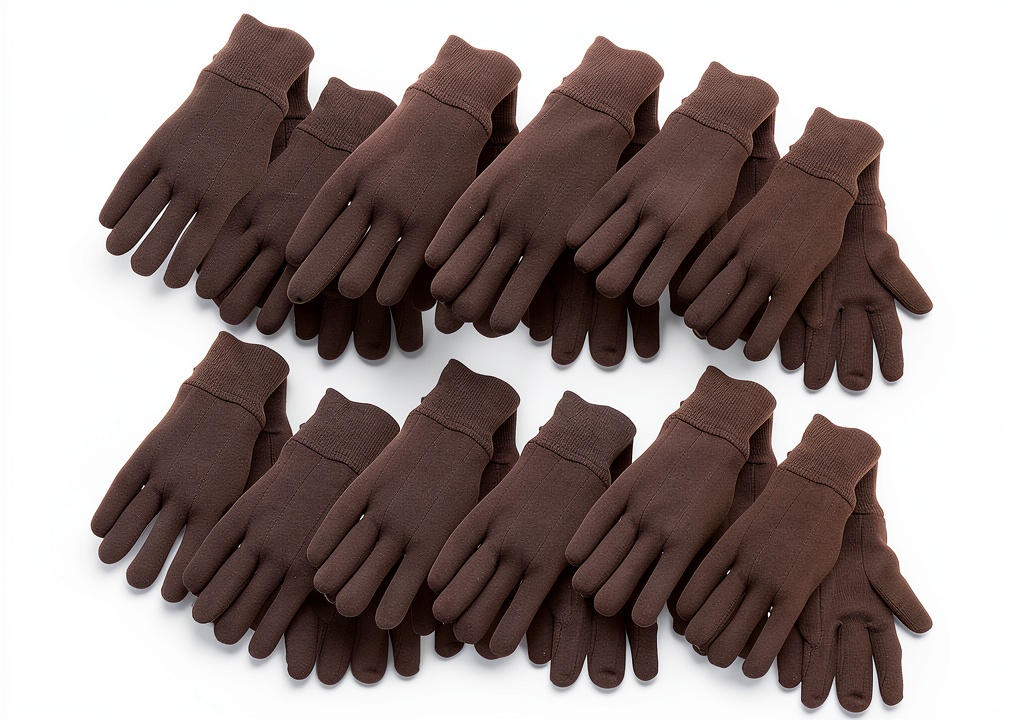
Midwest Gloves positions these brown jersey gloves as general-purpose workhorses, and that’s exactly what they deliver. The clute cut design (two-piece construction with seams on the palm side) strikes a balance between manufacturing efficiency and wearer comfort. Unlike the more complex gunn cut found in premium gloves, this construction keeps costs down while still providing reasonable dexterity.
| Specification | Details |
|---|---|
| Material | Cotton/Polyester Jersey Blend |
| Cut Style | Clute Cut with Straight Thumb |
| Cuff Style | Knit Wrist |
| Pack Quantity | 12 Pairs |
| Size | Large (Fits most men’s hands) |
| Weight | 1.15 pounds total package |
| Primary Use Cases | Light construction, gardening, material handling |
Real-World Performance & Feature Analysis
Design & Build Quality
The jersey fabric feels substantial in hand – noticeably heavier than dollar-store cotton gloves but lighter than leather-palmed options. During testing, the straight thumb design proved its worth during extended warehouse inventory work. Unlike curved thumb patterns that can create pressure points, the straight configuration reduced thumb webbing fatigue during repetitive grasping motions. The seams are reasonably well-constructed, though I found occasional loose threads that required trimming before first use.
Performance in Real Use
I put these through three common scenarios: landscaping, workshop projects, and warehouse sorting. For moving potted plants and light yard work, they provided excellent breathability and just enough abrasion resistance. However, when handling rough lumber with splinters, I noticed the fabric snagged more easily than reinforced gloves. In the workshop, the dexterity shone through – I could easily pick up screws and small hardware without removing the gloves. The knit cuffs effectively blocked sawdust during cutting operations, though fine particulate dust eventually worked through after several hours.
Ease of Use
These gloves break in immediately – no stiff period like leather work gloves. The tag-less design prevents neck irritation when wiping sweat, a small but appreciated detail. The cotton-rich fabric washes reasonably well, though I noticed slight shrinkage after three hot water cycles. For best results, wash in cold water and air dry. The bulk pack organization is straightforward – all 12 pairs come bundled together without individual packaging, making storage simple.
Durability & Reliability
After cycling through multiple pairs over two months, the durability pattern became clear. The fabric holds up well against general abrasion but fails quickly against sharp edges. One pair developed a palm tear after snagging on a metal bracket corner. The knit cuffs lost elasticity after repeated use, becoming less effective at keeping debris out. For context: these lasted 3-4 times longer than basic cotton gloves but only about half as long as premium synthetic-leather hybrid gloves in similar conditions.
 Brown Jersey Work Gloves Large Pack of 12 showing wear after landscaping use” />
Pros & Cons
Pros
- Superior breathability compared to synthetic alternatives in hot conditions
- Immediate comfort with no break-in period required
- Excellent value per pair at roughly $1 per glove in the bulk pack
- Good dexterity for handling small objects and tools
- Effective dust barrier for dry particulate materials
Cons
- Limited wet grip – become slippery when damp
- No reinforced areas for high-wear locations
- Cuff elasticity degrades with repeated use and washing
- Minimal chemical resistance – absorb oils and solvents quickly
- Moderate abrasion resistance only suitable for light to medium duty
Comparison & Alternatives
Cheaper Alternative: Generic Cotton Jersey Gloves
At big-box stores, you can find basic cotton gloves for about half the price. While initially similar, the difference becomes apparent quickly. Generic gloves use thinner fabric that wears through in days rather than weeks and lack the polyester reinforcement that gives Midwest gloves their durability edge. Choose generics only for single-use applications or extremely light duty.
Premium Alternative: Mechanix Wear FastFit
At 4x the price per pair, Mechanix gloves offer synthetic leather palms, reinforced stitching, and targeted padding. The performance gap is substantial – Mechanix gloves withstand sharp edges and provide superior grip in both dry and slightly damp conditions. However, they lack the breathability of jersey fabric and cost significantly more. Choose these when job requirements demand higher protection levels.
When to Choose Each
- Choose Midwest Jersey: Dry conditions, budget-conscious bulk buying, moderate dexterity requirements
- Choose Generic Cotton: Single-use applications, minimal abrasion risk, tightest budget
- Choose Premium Synthetic: Wet/oily conditions, sharp material handling, enhanced protection needs
Buying Guide / Who Should Buy
Best For Beginners
If you’re new to buying work gloves in bulk, this 12-pack offers a low-risk entry point. The moderate price means you’re not over-investing while you learn what features matter most for your specific tasks. The general-purpose nature makes them suitable for various light projects around home and garden.
Best For Professionals
Crew leaders and facility managers will appreciate the consistent sizing and predictable performance. These work well as standard-issue gloves for teams where individual glove preferences vary. The bulk packaging simplifies inventory management, and the cost structure supports treating them as semi-disposable PPE.
Not Recommended For
Avoid these gloves if your work involves: welding sparks (no flame resistance), chemical handling (fabric absorbs liquids), heavy construction with rebar or concrete forms (insufficient abrasion resistance), or food processing (not compliant with food safety standards).
FAQ
How many washes do these gloves typically withstand?
In testing, they maintained shape and function through 5-7 wash cycles before significant cuff elasticity loss. For extended lifespan, wash in cold water and air dry rather than machine drying.
Do they run true to size for large hands?
Yes, the large size accommodates most men’s hands comfortably. If you typically wear medium but want a looser fit for airflow, consider sticking with your normal size as the fabric has natural stretch.
Can these be used for automotive work?
Limited use only. They provide basic protection during light maintenance but should be avoided around oils, solvents, and sharp engine components. The fabric absorbs fluids quickly and offers minimal protection against cuts.
How do they compare to leather palm gloves?
Leather palm gloves provide significantly better abrasion resistance and dry grip but lack the breathability and dexterity of jersey fabric. Choose leather for heavy material handling, jersey for lighter tasks requiring more finger sensitivity.
Is the 12-pack too many for occasional users?
Possibly. While the per-glove cost is better, occasional users might prefer a 6-pack if available. However, having extras means you can keep pairs in multiple locations (garage, truck, workshop) which often proves convenient.